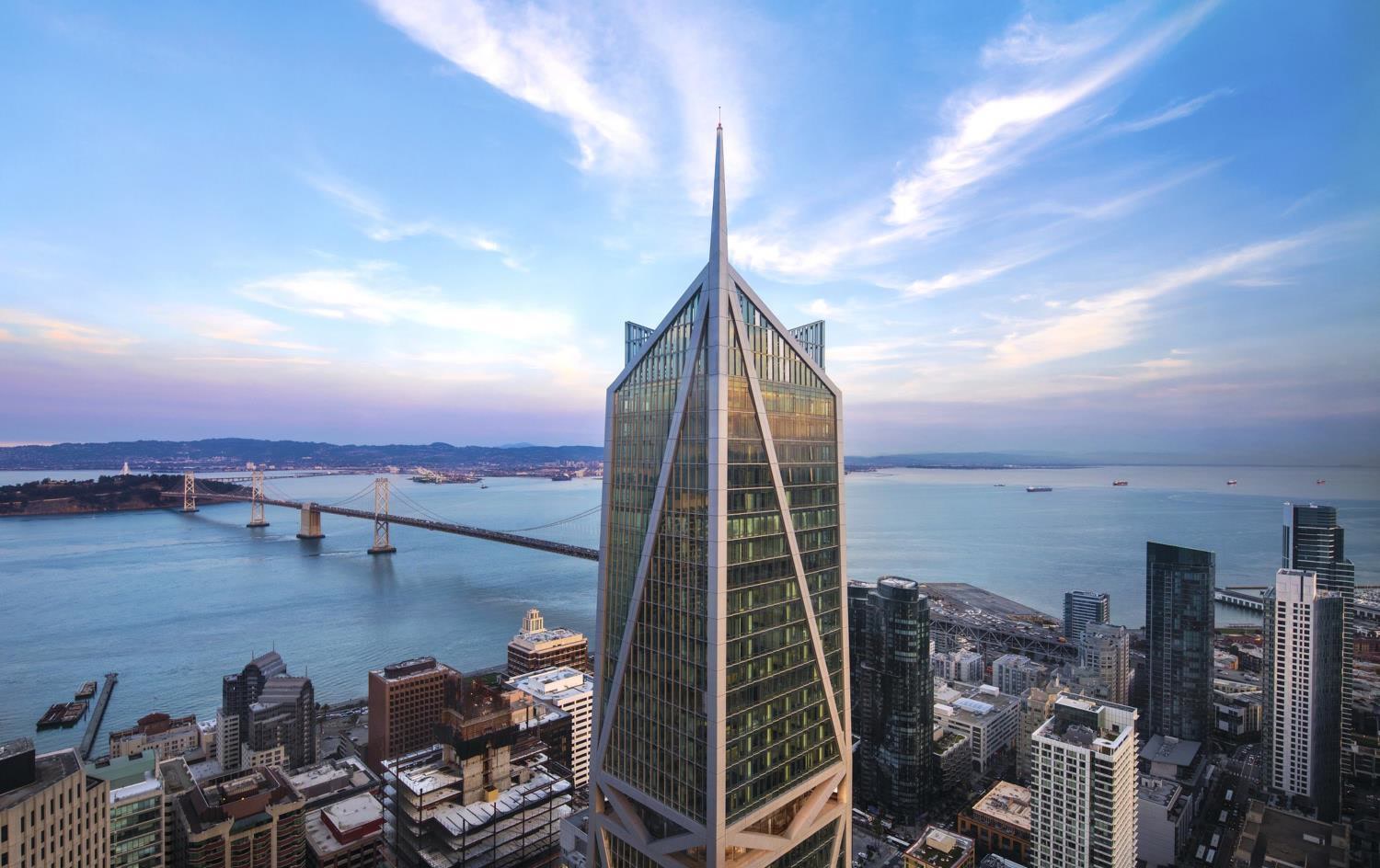
Selling a condo at 181 Fremont in 2026 is a stack problem: your unit is priced against other units in the same tower, not the wider neighborhood. Three closed in the building this year at a median $1.15M and $1,558 per square foot, and all three sold under their asking price (MLS).

Your buyer is not comparing your unit to a Victorian in Noe Valley. They are weighing it against the other unit on a nearby floor, and the price turns on floor level, view tier, parking, plus overall condition.
181 Fremont is a 2018 tower that sits next to the Salesforce Transit Center, in the Yerba Buena and Transbay pocket of San Francisco. As a seller, the good news is that your comp set is unusually clean: you can price off units in your own building rather than guessing across a mixed neighborhood. The harder news is that the buyer pool for a high-floor tower condo is narrow, and in 2026 it has been negotiating. I'm Chris Chour, founder and broker of EON Real Estate, and most of my work is single-family and condo transactions in SF's luxury neighborhoods. The playbook for this building is not "list high and ride a wave." It is "know which line you own, price to the stack, and decide how much market exposure you actually want." Three scenarios cover most of what I see here.
181 Fremont's resale market right now
Unless otherwise noted, all market figures in this guide are from MLS data. Three condos closed inside 181 Fremont in the trailing six months: a one-bedroom at $1,037,500 in March 2026, a two-bedroom at $2,435,000 in April 2026, and a one-bedroom at $1,150,000 in July 2026. The median close was $1.15M and the median price was $1,558 per square foot. Eight units are listed for sale in the building right now, which is a meaningful share of a single tower and tells you supply is not scarce.
Two numbers matter more than the median. First, days on market ranged from 0 to 63, so "how fast will it sell" has no single answer here; it depends on the line and how you take it to market. Second, the citywide San Francisco median sale price over the trailing twelve months was $1.75M with an average of $1,189 per square foot and a median 12 days on market. 181 Fremont's per-square-foot median of $1,558 sits well above that citywide average, which is the premium a new high-rise with transit at the base still commands. But its days-on-market spread is wider and slower than the citywide 12-day median, because tower resale is a thinner market than a turnkey house in a hot neighborhood.
181 Fremont by the numbers

Three seller scenarios inside the 181 Fremont stack
Every recommendation below ties to a specific 2026 closing in the building, because that is the only comp set that prices your unit honestly.
Scenario 1: the one-bedroom line, and the patience-versus-speed tradeoff
The building's two one-bedroom closings this year tell a clean story about exposure. Unit #54M, a 666-square-foot one-bedroom with a Bay Bridge water view and parking, closed at $1,037,500 in March 2026 in 0 days on market, meaning it sold to a ready buyer without a full public marketing run, at $1,558 per square foot. Unit #54J, a 666-square-foot one-bedroom on the same floor with a city view and parking, was fully listed, sat 63 days, and closed at $1,150,000, or $1,727 per square foot. The water-view unit sold faster; the fully marketed unit captured a higher price per square foot. If you own a one-bedroom line here, that is your core decision: a quiet, fast sale can leave real money on the table, and the recommended move is to test the open market before you accept a quick number, unless speed or privacy genuinely outweigh price for you.
Scenario 2: the larger tenant-occupied unit
Unit #56C, a 1,605-square-foot two-bedroom with a city-plus-water view, was tenant-occupied when it listed. It closed at $2,435,000 in April 2026 after 54 days on market, $160,000 under its $2,595,000 asking price, which is about 6.2 percent below ask, at $1,517 per square foot. Two forces worked against it: a larger absolute price narrows the buyer pool, and tenant occupancy constrains showings and adds timing complexity under San Francisco's owner-move-in rules. My recommendation for a larger unit is to deliver it vacant and staged if you can arrange it. If you cannot, price for the friction from day one rather than chasing the market down over two months, and build the tenant timeline into your disclosures so buyers are not surprised.
Scenario 3: pricing off view tier and parking, not the headline median
The three 2026 closings carried three different view tiers: water, city-plus-water, city. Two of the three included parking, a 67 percent parking share in this year's sales. Those attributes move your number more than the building-wide median does. A water-view line with parking and a city-view line without it are not the same asset, even on the same floor level. The recommended approach is to find the closest match to your own unit's view tier and floor level (parking included) in the recent in-building set, then adjust from there, rather than applying one blanket price per square foot to the whole tower. Do not assume a water view alone guarantees the top price: unit #54J proved a fully marketed city-view unit can out-earn a quietly sold water-view unit on a per-foot basis.
Pricing discipline: build your number from the stack, not the city
List price at 181 Fremont should be built from in-building closings, because SF closed-sale prices are public record and the math is auditable. Start with the two anchors at the ends of the range. Unit #54M closed at $1,037,500 on 666 square feet, which is $1,558 per square foot. Unit #56C closed at $2,435,000 on 1,605 square feet, which is $1,517 per square foot. Those two sales, six weeks apart, bracket the building at roughly $1,517 to $1,558 per square foot for standard view lines, with #54J's $1,727 per square foot marking what full exposure on a smaller unit can reach.
Multiply your own square footage by that in-building range, then adjust up for a higher floor level, a water view, or parking, and down for their absence. A blanket citywide figure will mislead you in both directions: the citywide average of $1,189 per square foot understates this building, while a peak new-construction number from the developer's original sales would overstate today's resale. The comp set that prices you correctly is the one in your own lobby. If you want to see how tower pricing differs from house pricing across the city, our guide to buying a condo in San Francisco walks through the same per-type discipline from the buyer's side.

Staging, photography, and the marketing window for a view condo
A tower condo sells on light and view, and the 2026 data supports spending on both. The unit that captured the highest price per square foot in the building this year, #54J at $1,727, was the one that ran a full marketing cycle rather than selling quietly. Photography here should be view-forward, including a twilight set that shows the city or water outlook a buyer is actually paying the premium for, because that outlook is the single attribute the citywide average cannot replicate.
Staging a 666-square-foot one-bedroom is a different job than staging a 1,605-square-foot two-bedroom: the small lines need furniture scaled to keep the floor plan reading open, while the larger unit needs to justify a $2M-plus number with rooms that feel resolved. San Francisco's selling calendar runs a spring cycle from after Valentine's Day through June and a fall cycle from late August to Halloween, and this building's 2026 closings landed across both, so time your launch to one of those windows rather than the quiet stretches. Staging is not free, and our breakdown of home staging costs in San Francisco shows what to budget. Do not list a vacant, unstaged tower unit with phone photos and hope the view carries it; that is the fastest way to sit past 60 days and then cut price.
Off-market versus listing on the MLS
This building gives you a live example of both paths in the same year. Unit #54M's 0-day sale looks like an off-market or pre-marketed deal: fast, private, and at $1,558 per square foot. Unit #54J's fully listed 63-day sale reached $1,727 per square foot. Off-market makes sense when the buyer pool is narrow, privacy matters, or you need certainty and speed. Listing on the MLS makes sense when you want price discovery and competitive pressure, which is what pushed #54J's per-foot number higher. EON is a member of Top Agent Network, an invite-only network for top-producing agents, so I can quietly circulate a 181 Fremont unit to serious buyers' agents before deciding whether a full MLS launch will earn more. The honest read: off-market buys speed and discretion, and full exposure usually buys a higher per-foot price.
What to consider before you list
The building is not scarce right now
With eight units already listed in a single tower, your unit competes with its own neighbors. That argues for pricing at the realistic in-building number rather than an aspirational one, because an overpriced unit in a well-supplied building is the one that sits.
Every 2026 sale closed under ask
All three closings came in below their list prices, from about 3 percent under on the one-bedrooms to 6.2 percent under on the larger unit. Set your ask expecting a negotiation, and do not read the developer's original 2018 pricing as today's market.
Confirm your HOA and financing picture early
High-rise condo buyers finance against the building's HOA and reserves, and lenders scrutinize tower projects closely. Have your HOA documents ready before you list, including dues and reserves, because a financing question raised late is what turns a 30-day sale into a 63-day one.
What is the median sale price at 181 Fremont in 2026?
The median in-building sale price was $1.15M over the six months to September 2026, across three closings that ranged from $1,037,500 to $2,435,000 (MLS). The median worked out to $1,558 per square foot. Your own unit's number depends on its floor level, view tier, square footage, and parking, so treat the $1.15M median as the center of a wide range, not a fixed value.
How long do condos at 181 Fremont take to sell?
It varied widely in 2026: the three in-building closings ran from 0 to 63 days on market (MLS). The 0-day sale was a one-bedroom that sold without a full public marketing run, while the fully listed one-bedroom took 63 days but closed at a higher price per square foot. Plan for a marketing window closer to the longer end if you want full price discovery.
How much does a condo at 181 Fremont cost per square foot?
The median was $1,558 per square foot over the trailing six months, with 2026 closings running from $1,517 to $1,727 per square foot depending on the line (MLS). For comparison, the San Francisco citywide average was $1,189 per square foot over the trailing twelve months, so 181 Fremont trades at a clear premium to the citywide figure, as a 2018 high-rise on the transit center tends to.
Should I sell my 181 Fremont condo off-market or on the MLS?
In 2026, listing on the MLS earned more at 181 Fremont, so choose it if your priority is price. The building's fully marketed one-bedroom reached $1,727 per square foot, while a comparable one-bedroom that sold in 0 days off a quieter process closed at $1,558 per square foot (MLS). Full market exposure usually earns more; off-market buys discretion and certainty when speed or privacy matter.
Does a parking space add value at 181 Fremont?
Parking is a real value driver here: two of the building's three 2026 closings included a space, a 67 percent parking share (MLS). In a downtown tower where a deeded space is not guaranteed, a unit with parking widens its buyer pool and supports a firmer price. If your unit has a space, feature it; if it does not, price against the comps that also lacked one.
Talk to me about selling at 181 Fremont
When you are ready to set a number, I can pull the in-building comp set for your exact line, model the value of your floor level and view tier, parking included, against the 2026 closings, and lay out the off-market and full-MLS paths side by side so you can choose with the data in front of you. If you are still deciding on representation, our guide to choosing a San Francisco listing agent is a good place to start.