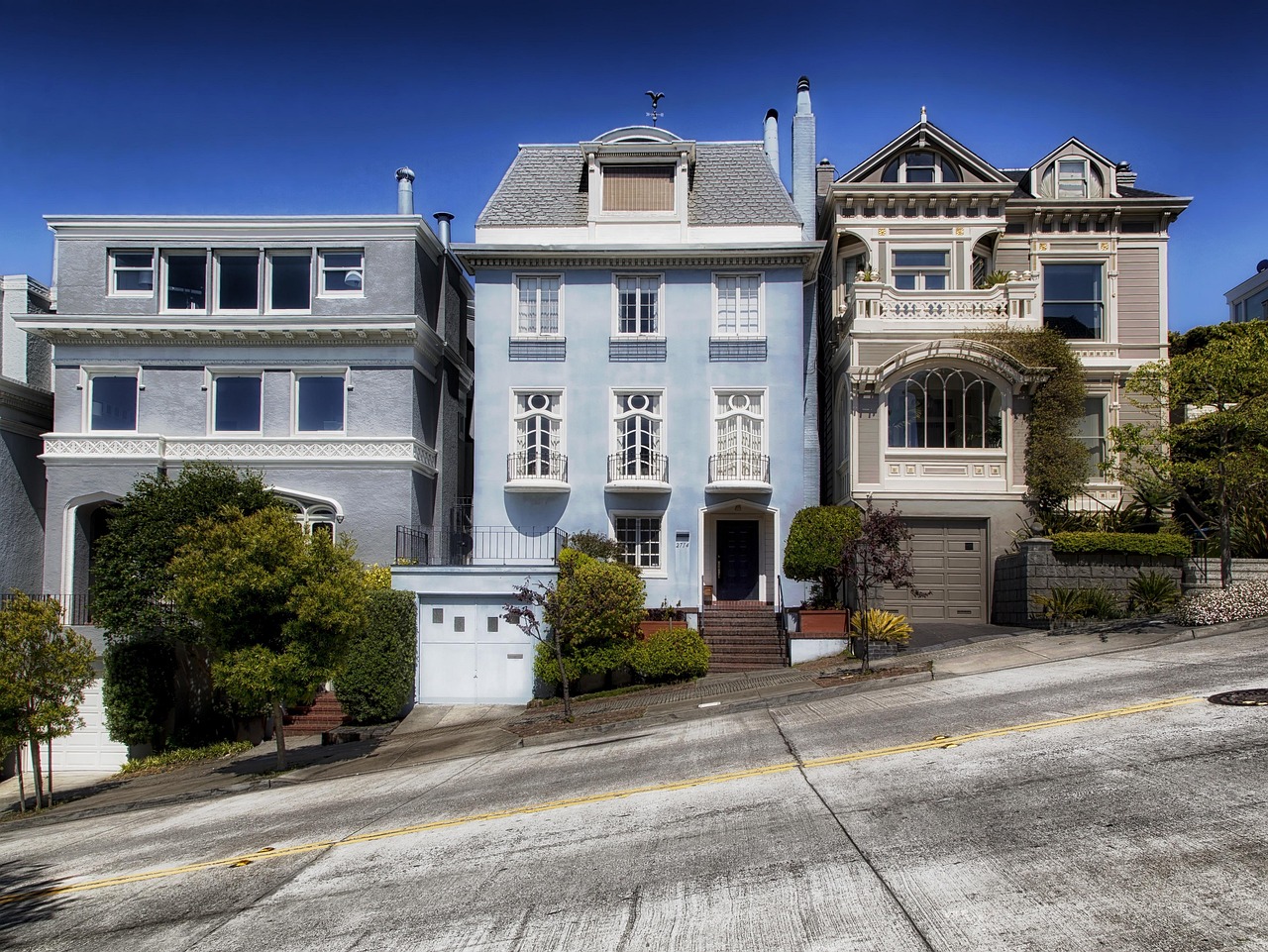
Potrero Hill is one of San Francisco's clearest two-track markets. As of Q4 2026, condos close around a $1.21M median while single-family homes sit near $2.8M, and the last 30 days produced a $1.86M overall median across nine sales at a brisk 13-day median time on market. It is sunny and central, with structurally thin inventory.
Unless otherwise noted, all market figures in this guide are from MLS data.
Potrero Hill earns its name. It is known as one of the sunniest neighborhoods in the city, with views of the skyline, Sutro Tower, Twin Peaks, and the bay (Wikipedia). That is not just reputation: National Weather Service readings put the hill about 1.3°F above the citywide average, which is the kind of margin that actually shows up on a south-facing deck in August. The neighborhood was working-class into the late 1990s and is now among the higher-income pockets in San Francisco, with a block-group median household income around $218K per the Census Bureau's American Community Survey. After running comp sets across dozens of Potrero Hill closings this year, the pattern I keep seeing is a market that splits hard by property type, so the first thing I tell buyers is to stop looking at a single neighborhood median and start looking at the number for the thing they actually want to buy.
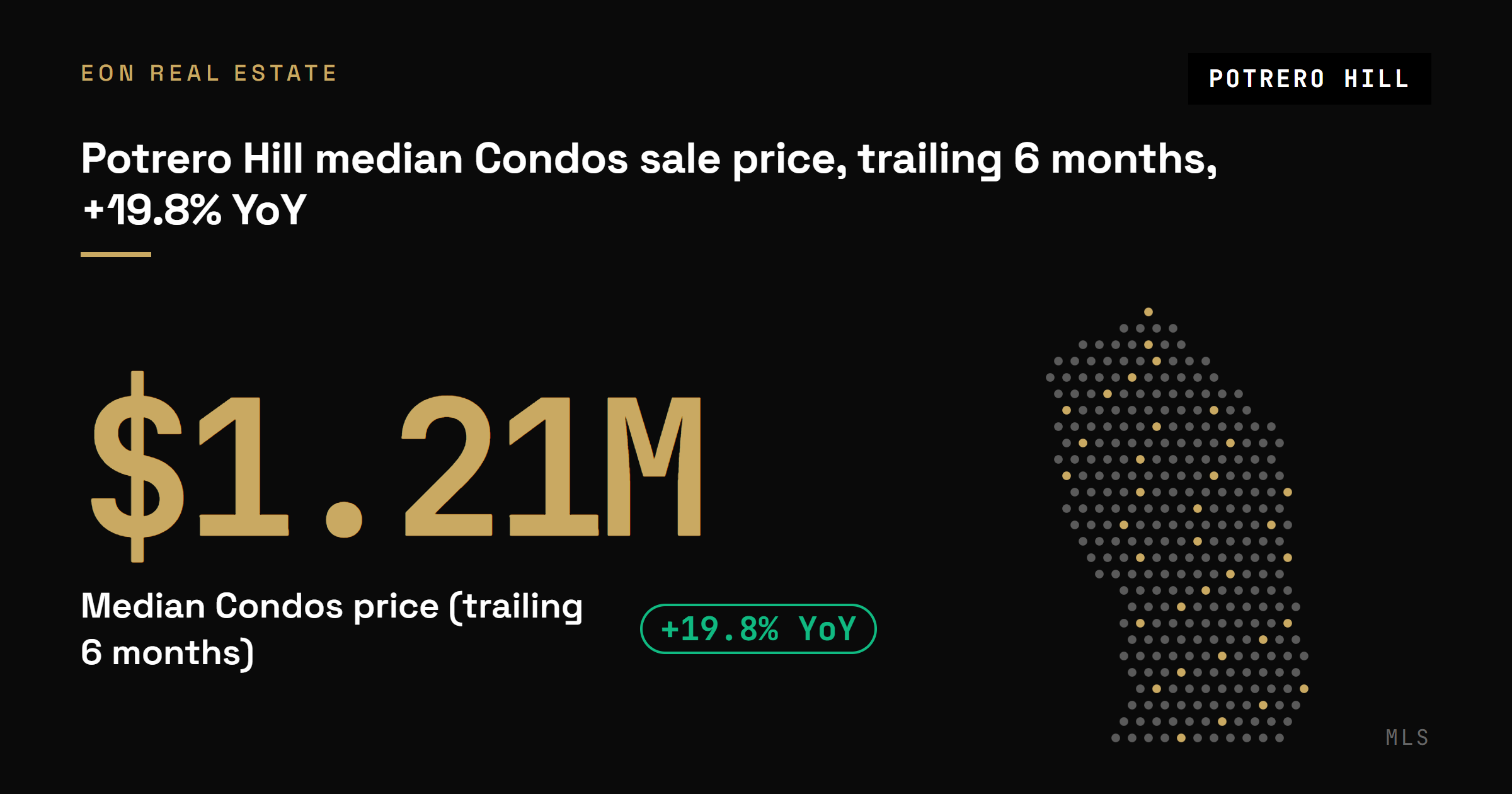
Potrero Hill by the numbers
The figures below weight the most recent sales more heavily than the full-year average, because the last 30 and 180 days are what an appraiser and an active buyer actually use.
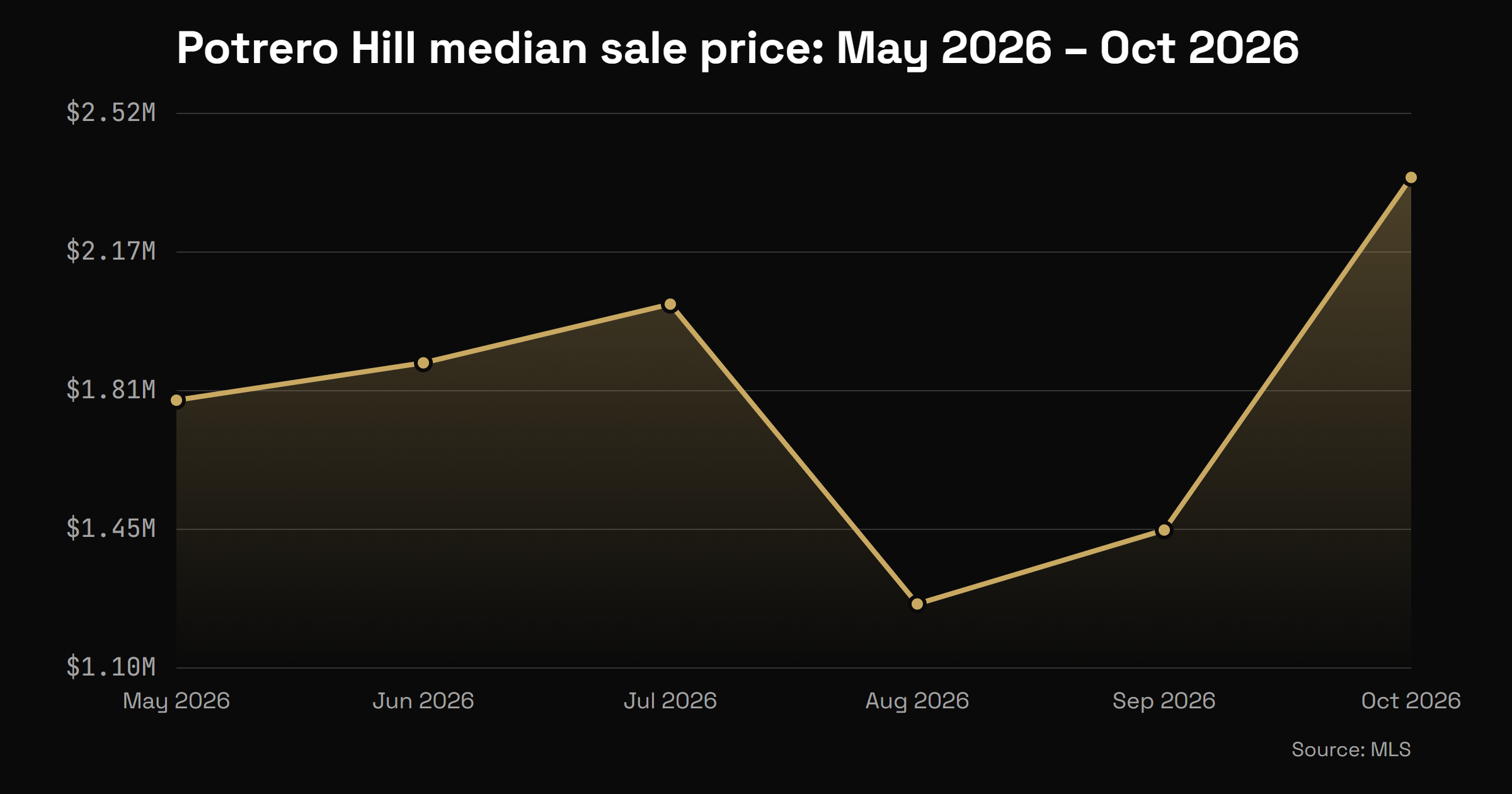
Pull the lens back one notch and the trailing six months show 64 closings at a $1,756,250 median, again with a 13-day median time on market. The full trailing year ran 108 sales at a $1.6M median. On a per-square-foot basis, Potrero Hill is up 21% from a year ago, and the average time on market has fallen to 35 days from 54 a year earlier, so this is a market that has gotten faster and firmer, not softer. For context, the citywide median over the trailing year was $1.75M with an average of roughly $1,219 per square foot, which puts Potrero Hill's recent per-foot pricing right in line with San Francisco as a whole.
The price tiers, and what trades in each
Over the trailing year, 108 closings sorted into five price tiers, and the mix inside each tier tells you more than the headline median does.
The under-$1M tier took 25% of sales (27 closings), and it is almost entirely condos: 23 of the 27, mostly one-bedrooms. This is the entry point to the neighborhood, and it is where a first-time buyer or a pied-a-terre purchaser competes. The $1M to $2M tier is the largest at 37% (40 closings), split between 25 condos and 9 single-family homes, weighted toward two-bedroom and three-bedroom floor plans. This is the heart of the market, and it is where the condo and house markets briefly overlap before they diverge for good.
From $2M up, the market turns into a house market. The $2M to $3M tier (25 closings, 23% of the year) runs 10 single-family homes and 9 condos, plus 4 duplexes, concentrated in three-bedroom and four-bedroom layouts. The $3M to $5M tier (14 closings, 13%) is 12 single-family homes out of 14, almost all four-bedrooms. At the top, only two sales closed above $5M over the year, both detached houses. If you are shopping above $2.5M, you are effectively shopping for a renovated single-family home on the hill, and the comp set narrows quickly. I tell those buyers to widen their patience, not their price, because a well-located four-bedroom here does not come up every week.
The blocks that trade most
A handful of blocks carry an outsized share of the volume, and they price very differently. The 400 block of Kansas Street was the busiest in the dataset with eight closings at a $1.26M median, around $1,186 per square foot, and it carries a 97 Walk Score, the highest in the neighborhood's top-traded blocks. That block is condo-heavy, which is why its median sits below the neighborhood's house number.
Climb the price ladder and the blocks change character. The 500 block of Kansas Street turned over four times at a $2.13M median ($1,409 per square foot), and the 400 block of Pennsylvania Avenue logged three sales at a $2.76M median. The 800 block of Wisconsin Street posted the richest median among the active blocks, $3.35M across three closings, the kind of number that signals detached houses with real square footage and views. On the other end, the 2200 block of 23rd Street traded four times at a $552K median ($888 per square foot), a reminder that smaller attached units and entry-level condos pull the low end down. The 1000 block of Rhode Island Street, four closings at a $1.79M median, carries an 87 Walk Score and sits in the quieter residential middle of the hill. The practical takeaway: on Potrero Hill, the block tells you the property type, and the property type tells you the price.
How the homes break down
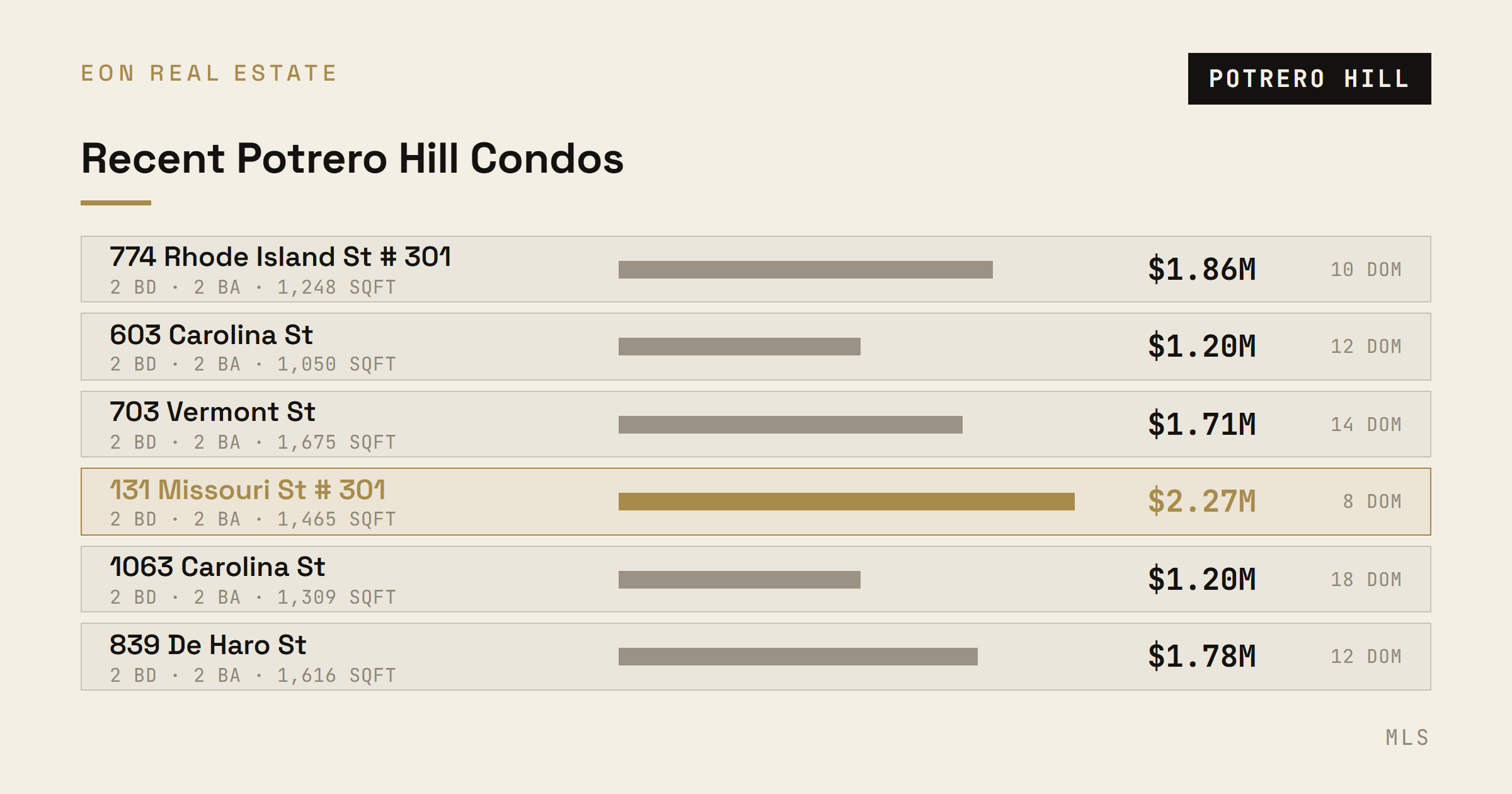
Potrero Hill is a condo-first neighborhood in transaction volume. Over the trailing year, condominiums were 53.7% of closings (58 sales) at a $1,232,000 median, single-family homes 31.5% (34 sales) at a $2,681,500 median, with duplexes, tenancy-in-common units, and small multi-unit buildings filling out the rest. So while the hill reads as a neighborhood of pastel Victorians from the sidewalk, more than half of what actually sells is attached.
The building ages back that up. SF Assessor records across roughly 5,300 parcels show a genuine split: about 22% of parcels date to 1900 to 1909, the Victorian core, and another 14% to the 1910 to 1929 Edwardian period, so more than a third of the hill's homes are pre-1930 wood-frame flats and row houses. But the single largest group, about 33%, is contemporary construction from 2000 onward, which is unusually high for a San Francisco neighborhood and explains the volume of newer condos. (SF Assessor records lag recent completions, so the true contemporary share is likely a touch higher.) If you want to understand how those eras price against each other, our guide to San Francisco home styles walks through how Victorian and Edwardian homes price against modern condos in detail. The median parcel on the hill was built around 1980, which neatly captures a neighborhood that is half historic and half new.
What to consider before buying here
This is the part most neighborhood guides skip, and it is the part that saves you money. Three tradeoffs are worth thinking through before you write an offer on Potrero Hill.
The hill is a real hill
The grade is steep enough that it shapes daily life, from where you park to how you get groceries home. Potrero Hill carries a 91 Walk Score but only a 58 Bike Score, rated "Bikeable" rather than better, and that gap is the terrain talking. I don't sugarcoat this part: on the steeper blocks, street parking is tight and a garage is worth paying up for, so if a listing has secure parking, factor that into the price rather than treating it as a bonus.
It is a condo market with condo economics
Because more than half of sales are attached, many buyers here are buying into an HOA, and a large share of the stock is newer construction where monthly dues and reserve health vary widely building to building. Before you fall for a unit, read the HOA budget and the reserve study, and confirm any litigation or warrantability questions with your lender, since those can affect both financing and resale.
The edges are industrial, and that cuts both ways
The eastern and southern slopes bleed into light-industrial and mixed-use parcels near the freeway corridor, which is why the 22nd Street Caltrain station sits a short walk away and why some blocks feel more urban than residential. That access is a genuine amenity for a Peninsula commuter, but it also means noise and traffic are real on the fringe blocks, so walk the specific block at rush hour before you commit.
Buyer and seller playbook for 2026
If you are buying on Potrero Hill this fall, the comp discipline that wins starts with the right comp set, not the neighborhood median. Price the exact property type on the exact kind of block: a two-bedroom condo should be compared against recent condo closings like 774 Rhode Island Street #301, which closed at $1.86M in September 2026 after just 10 days on market, or 603 Carolina Street at $1.2M, not against a detached house two streets over. For single-family buyers, 549 Kansas Street ($2.76M, three-bedroom, 12 days on market, June 2026) and 619 Connecticut Street ($2,553,525, renovated, May 2026) are the kind of recent, in-neighborhood trades that anchor a credible offer.
With a 13-day median time on market, the strongest offers here are clean, not just high. A pre-underwritten loan or a cash position, a short contingency timeline, and flexibility on the seller's rent-back often beat a marginally higher number with more conditions. Watch condition, too: the longest days on market in the data belonged to tenant-occupied sales like 436 San Bruno Avenue, which took 73 days, because an occupied unit carries San Francisco's owner-move-in rules and timing. If you are new to how this all sequences, our explainer on how long the buying process takes lays out the timeline.
If you are selling, the fast market rewards preparation over patience. Price to the most recent 30-day and 90-day comps for your exact property type, stage to the light-and-airy aesthetic the hill's buyers expect, and go to market mid-week in the spring or fall selling window rather than over a holiday. Budget realistically for the sell side as well: our breakdown of what seller closing costs cover will keep the net-proceeds math honest from the start.
Is Potrero Hill a good place to buy in 2026?
Yes, as of Q4 2026 it is, provided you buy the right property type at the right number. The neighborhood is fast and firm, with a 13-day median time on market over the last 30 days and per-square-foot pricing up 21% year over year. It suits buyers who value sun and central access and who are disciplined enough to comp by property type rather than chasing a single neighborhood median.
How much does a home cost in Potrero Hill?
It depends sharply on type: as of Q4 2026, condos run a $1.21M median over the trailing six months while single-family homes sit near $2.8M. The last 30 days produced a $1.86M overall median across nine closings. Entry-level one-bedroom condos trade under $1M, the bulk of the market lives between $1M and $2M, and renovated detached houses carry the $2M-and-up tiers.
Why is Potrero Hill so sunny?
Potrero Hill is known as one of the sunniest neighborhoods in San Francisco, and as of 2026 National Weather Service readings put it about 1.3°F warmer than the citywide average. Its position on the city's eastern side, away from the Pacific fog that rolls over the western and central neighborhoods, gives it more clear afternoons. That microclimate is one of the most durable reasons buyers pay a premium to live on the hill.
Is Potrero Hill mostly condos or houses?
Mostly condos by sales volume: over the trailing year through 2026, condominiums were 53.7% of closings versus 31.5% for single-family homes, per MLS data. The building stock is split too, with about a third of parcels built since 2000 and more than a third dating to the pre-1930 Victorian and Edwardian eras (SF Assessor). So the sidewalk reads historic, but more than half of what trades is attached.
How fast do homes sell in Potrero Hill?
As of the last 30 days of 2026, homes sell fast: the median time on market was 13 days, and the trailing-year average has fallen to 35 days from 54 a year earlier. Clean, well-priced listings in the heart of the market often sell inside two weeks, while tenant-occupied or as-is sales take materially longer, which is why condition and occupancy status matter as much as price.
What is Potrero Hill known for?
As of 2026, Potrero Hill is known for sunshine and views, plus unusually central access. It carries a 91 Walk Score and a 72 Transit Score, with Muni lines including the 19 Polk and the 22nd Street Caltrain station serving the hill, plus skyline, Sutro Tower, Twin Peaks, and bay views (Wikipedia). Once a working-class district, it is now among the higher-income neighborhoods in the city per the Census Bureau.
Talk to me about Potrero Hill
I'm Chris Chour, founder and broker of EON Real Estate, and a member of Top Agent Network, the invite-only group for the city's top-producing agents (Top Agent Network). Most of my work is single-family and condo transactions in San Francisco's luxury neighborhoods, and Potrero Hill is one I track block by block. When you are ready to look at real comps for the exact kind of home you want here, I can pull the property-type-specific comp set and walk you through what a winning offer looks like this season!