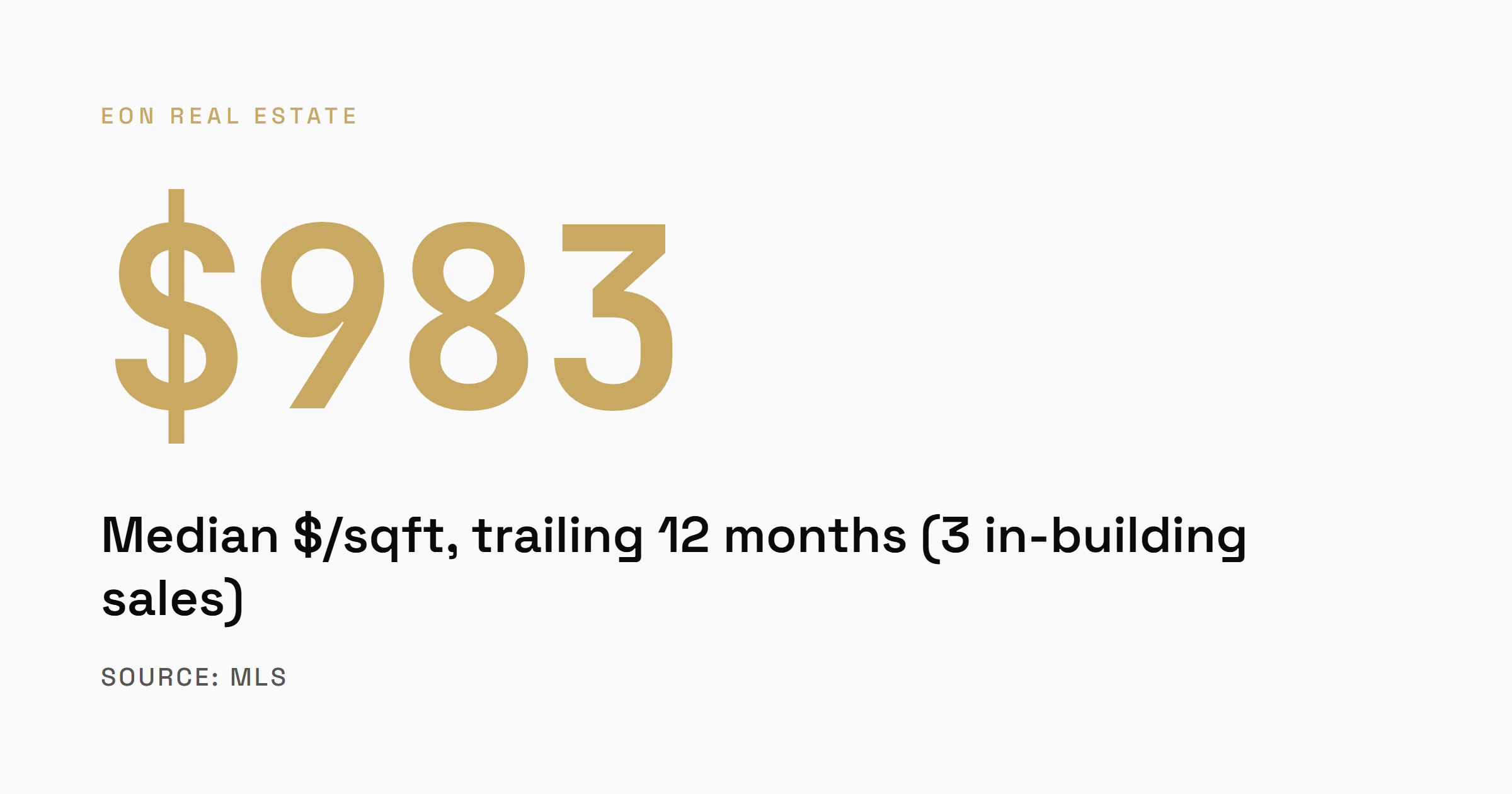
Cathedral Hill Tower is a 1927 co-op at 1201 California Street on Nob Hill, where small units set the tone. Over the trailing 12 months three co-ops closed between $575,000 and $1,005,000, a median of $983 per square foot, and every sale carried parking. Units here took 31 to 78 days to sell.
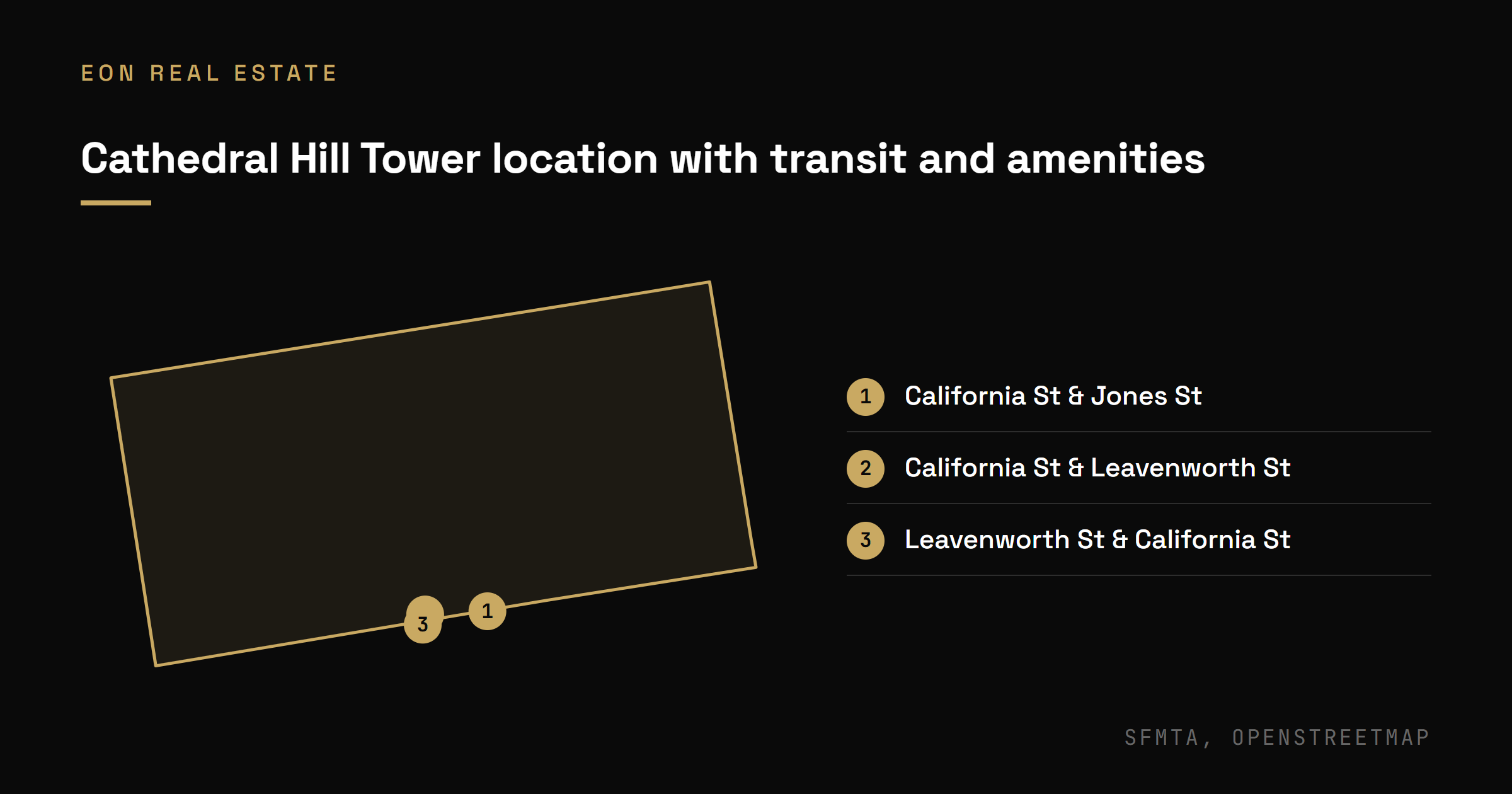
Unless otherwise noted, all market figures in this guide are from MLS data. The building sits at the corner of California and Jones on Nob Hill, and the California Street cable car stops within about 25 meters of the front door (SFMTA). After pulling the comp set on every 1201 California Street closing over the past year, I keep coming back to one thing: this is a studio-and-small-unit co-op, not a large-format view tower, so pricing it means reading floor level, view, size and condition one unit at a time.
I'm Chris Chour, founder and broker of EON Real Estate. Most of my work is single-family and condo transactions in San Francisco's luxury neighborhoods, and Nob Hill co-ops sit at the quieter, more disciplined end of that work. The building is a pre-war address in a Walker's Paradise: a 99 Walk Score and a 100 Transit Score put nearly everything a resident needs within a short walk (Walk Score). The comparison that misleads here is any read of this co-op against a newer condo tower, because the ownership structure and the unit sizes are simply different.
Cathedral Hill Tower by the numbers
The building is thin on volume: three closed co-op sales over the trailing 12 months, with one unit currently active. That is a small sample, so treat each closing as its own data point rather than a smooth trend line. The figures below span the studios that do most of the trading here and the one larger two-bedroom that closed in early 2026.
For context, the citywide median close price sits at $1.75M with an average of $1,215 per square foot over the trailing 12 months. Cathedral Hill Tower trades below both because the inventory here is small co-op units, not full-floor condos or houses. The median $983 per square foot reflects that mix, and the two-bedroom at $1,005,000 shows what the top of the building looks like when a unit is larger and renovated.
What the three 2026 closings tell you
With only three sales to read, the price drivers show up plainly: floor level, view tier, interior size, condition and parking. Each one moved the number, and none of the three is a clean comp for the others.
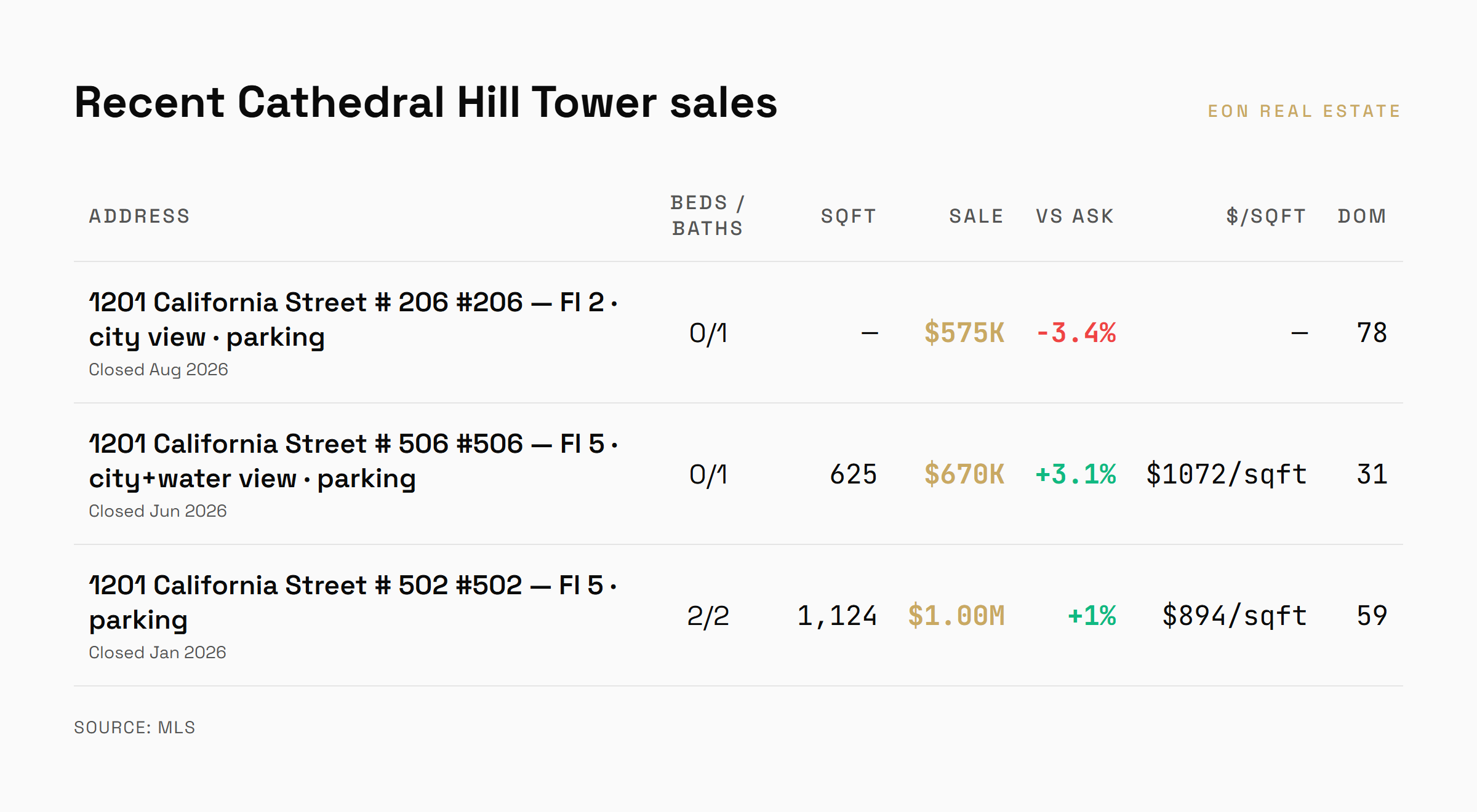
The lowest sale was a second-floor studio that closed at $575,000 in August 2026 after 78 days on market. It was renovated and carried a city view and parking, but a low floor and a longer marketing period pulled the price to the bottom of the range. The middle sale, a fifth-floor studio of 625 square feet, closed at $670,000 in June 2026 in just 31 days. That unit is the reason the building's median sits where it does: it had the best outlook in the set, a mix of bay, city and Golden Gate Bridge views, plus one parking space, and it sold fast at about $1,072 per square foot.
The top sale was a fifth-floor two-bedroom of 1,124 square feet that closed at $1,005,000 in January 2026 after 59 days. It was renovated but carried no view, which is why its price per square foot, roughly $894, came in below the smaller fifth-floor studio despite the higher headline number. That inversion is the single most useful lesson in this building: a well-placed view on a small footprint can out-earn square footage on a per-foot basis. I read that as a reason to price the view line and the space line separately rather than blending them.
Getting around from 1201 California Street
Transit is the building's strongest practical asset, and the data backs it. Cathedral Hill Tower earns a 100 Transit Score, described as a Rider's Paradise, and a 99 Walk Score (Walk Score). The California Street cable car stops at California and Jones, about a 23-second walk from the door (SFMTA). The 1 California bus runs a block north on Sacramento at Jones, and the 27 Bryant picks up on Leavenworth within a short walk (SFMTA).
The surrounding grid is dense and flat enough to walk for daily errands even on a hill: Taylor, Hyde, Clay, Pine and Bush streets are all within a few blocks. The Bike Score is a more modest 60, or Bikeable, which is honest for a corner defined by steep grades (Walk Score). For most residents here, the cable car and the two bus lines do the daily work, and a car becomes a convenience rather than a necessity, which matters given how tight street parking runs on Nob Hill. The pocket also reads slightly warmer and less foggy than the city as a whole, about 1.3 degrees Fahrenheit above the citywide average at nearby stations (National Weather Service).
How the building is put together
Cathedral Hill Tower dates to 1927, and its ownership structure is the detail that changes everything about buying here: every recent sale in the building was a co-op, not a condo. In a co-op you buy shares in the corporation that owns the building along with a proprietary lease to your unit, rather than a deeded condominium. That structure shapes financing, board approval and resale, and it is the first thing I flag to any buyer looking at 1201 California Street.
The unit mix skews small. Two of the three trailing-year sales were studios, and the larger two-bedroom was the exception rather than the rule. All three closings included parking, which is a genuine advantage in a pre-war Nob Hill building where parking is often the scarcest feature. The wider block group reads as a pre-war, renter-heavy pocket: the median year a structure was built here is 1938 and owner-occupancy runs near 10 percent, with a median household income around $92,000 (Census ACS). A co-op board in a building like this typically sets its own rules on owner-occupancy and financing, so the building's own numbers matter more than the block-group averages.
What to consider before buying a co-op at Cathedral Hill Tower
The walkability is easy to sell. The tradeoffs are where the real decision lives, and this building has several worth naming plainly.
Co-op ownership and financing
Because the building trades as co-ops, your lender pool is narrower than it would be for a condo, and the co-op board reviews and approves buyers. That can mean more paperwork, financial disclosure to the board, and limits on renting the unit out later. None of this is a dealbreaker, but it is a different process, and it belongs in your timeline from day one.
The view lottery on lower floors
The 2026 sales prove that a view is worth real money here: the fifth-floor studio with a bay-and-bridge outlook out-earned a larger two-bedroom on a per-foot basis. A second-floor unit with a city view sat for 78 days before closing at the bottom of the range. If a view matters to you, the floor and orientation you buy will drive both your price and your resale speed.
Small units and a thin comp set
With only three closings in a year, appraisals and offer strategy lean on a very small in-building sample. Studios dominate, so if you need a true two-bedroom, expect to wait for the rare larger unit and to comp it partly against similar pre-war Nob Hill co-ops. I don't sugarcoat this part: thin data means more judgment and more room for a mispriced list, in either direction.
Renter-heavy surroundings
The immediate block group runs heavily toward renters, with owner-occupancy near 10 percent (Census ACS). That is common for this stretch of Nob Hill and it does not make the building a poor place to own, but it does mean owner-occupancy and financing terms are set inside the co-op, not by the neighborhood, so confirm them before you write an offer.
The buyer playbook for a 1201 California Street co-op
Buying well here is less about timing the market and more about reading the specific unit against the specific building. I've watched small co-ops trade on details that a citywide median never captures, so the levers below are where I would spend your attention.
Start with the co-op paperwork. Get the building's financials, the board's rental and owner-occupancy rules, and its financing requirements in front of your lender early, because those constraints decide which units you can realistically buy. Next, price the view and the floor as their own line items: the 2026 sales show a bay-and-bridge fifth-floor studio commanding a higher per-foot price than a view-less two-bedroom, so do not assume more square footage means a higher price per foot.
Then weigh the deal dynamics at the table rather than a single timing rule. A clean, board-ready offer with financing already vetted can beat a higher offer that the board might stall. Parking, condition and whether the unit is vacant or occupied all move value, and every 2026 closing here came with parking, so a unit without it should price differently. Here's what I'd tell you before you write: anchor to the two or three most similar in-building sales, then adjust for view and floor, and confirm the co-op rules in writing.
How much does a co-op cost at Cathedral Hill Tower in 2026?
As of 2026, co-ops at Cathedral Hill Tower sold between $575,000 and $1,005,000, with a median close price of $670,000 over the trailing 12 months (MLS). The low end is a renovated second-floor studio and the high end a renovated fifth-floor two-bedroom. With only three sales in the window, each price reflects a distinct unit rather than a broad building average, and parking was included in all three.
What is the price per square foot at 1201 California Street?
The median price per square foot at 1201 California Street was $983 over the trailing 12 months in 2026 (MLS). Units varied widely: the fifth-floor studio with bay and bridge views closed near $1,072 per square foot, while the larger view-less two-bedroom came in around $894. That sits below the citywide average of $1,215 per square foot, reflecting the building's small co-op units.
How long do units take to sell at Cathedral Hill Tower?
In 2026, units at Cathedral Hill Tower took between 31 and 78 days on market to sell (MLS). The fastest was a fifth-floor view studio and the slowest a lower-floor studio. That is well behind the citywide median of 12 days, which is normal for a small co-op building where the buyer pool is narrower and board approval adds time to every sale.
Is 1201 California Street a co-op or a condo?
As of 2026, every recent sale at 1201 California Street closed as a co-op, not a condominium (MLS). In a co-op you own shares in the building corporation and hold a proprietary lease on your unit, rather than a deeded condo. This narrows your financing options, requires co-op board approval of the buyer, and often carries rules on renting, so budget extra time and disclosure into the purchase.
Does Cathedral Hill Tower have parking?
In 2026, all three co-op sales at Cathedral Hill Tower included parking, a real advantage in a 1927 Nob Hill building where parking is often scarce (MLS). Because the sample is small, confirm the exact arrangement for any specific unit, whether a deeded space or one assigned through the co-op, before writing an offer. On a steep hill, on-site parking widens the resale buyer pool.
Is Cathedral Hill Tower a good place to buy in 2026?
As of 2026, Cathedral Hill Tower suits a buyer who wants a walkable, transit-rich Nob Hill address and is comfortable with co-op ownership (MLS). It earns a 99 Walk Score and a 100 Transit Score, with the California Street cable car at the corner (Walk Score, SFMTA). The tradeoffs are real: small units, a thin comp set and co-op financing rules. For the right buyer, parking and location outweigh them.
Talk to me about Cathedral Hill Tower
If you're weighing a co-op at 1201 California Street, I can pull the unit-by-unit comp set, read the view and floor premiums against the most recent closings, and walk you through the co-op board and financing questions before you write an offer. When you're ready to look, reach out and we will start with the numbers.