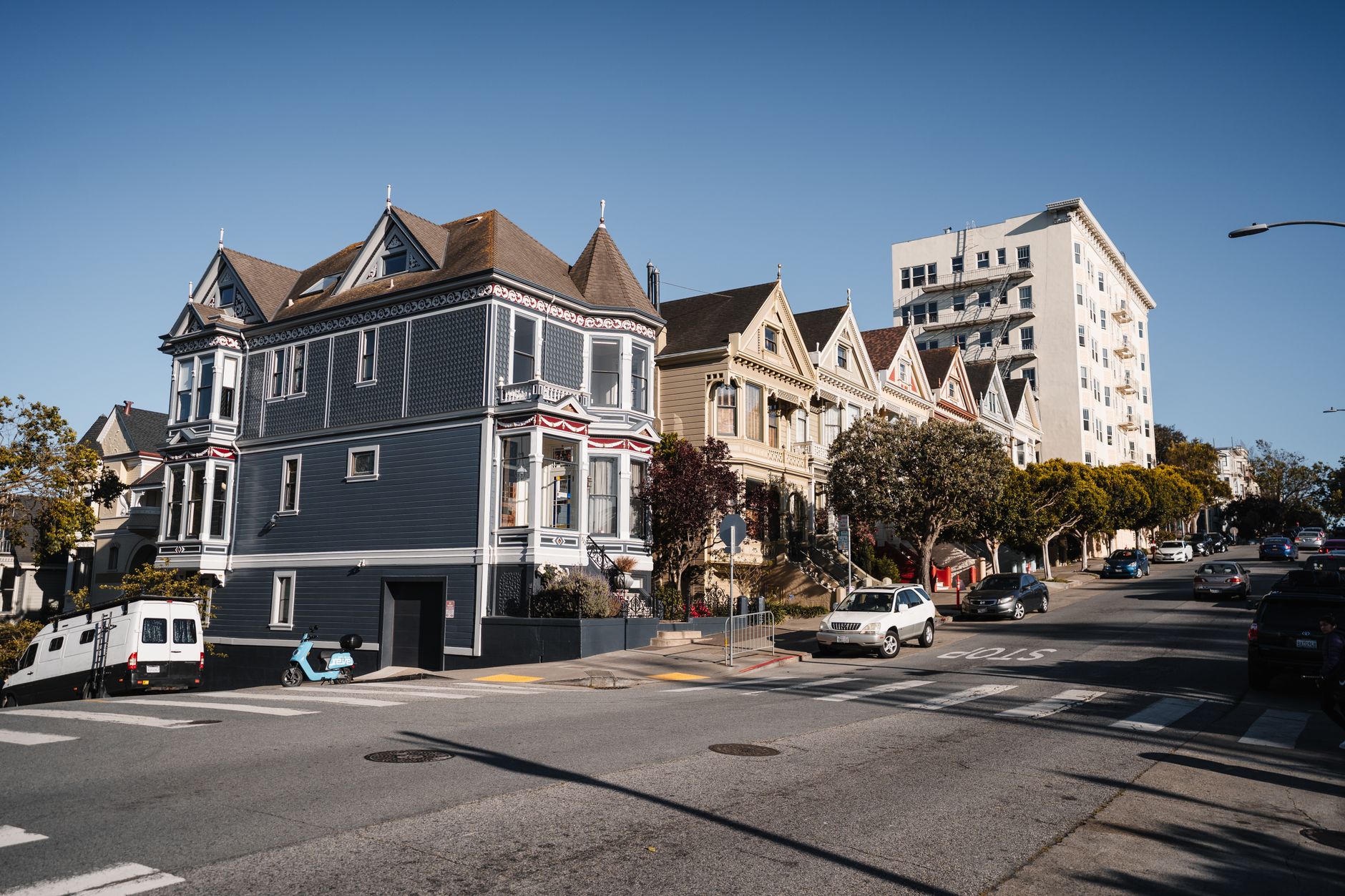
Hayes Valley is a condo market first, and in September 2026 it is a fast one. Condos closed at a $1.17M median over the trailing six months, up 9.2% year over year, in a median 15 days on market. Most recent closings sold over asking.
Unless otherwise noted, all market figures in this guide are from MLS data.
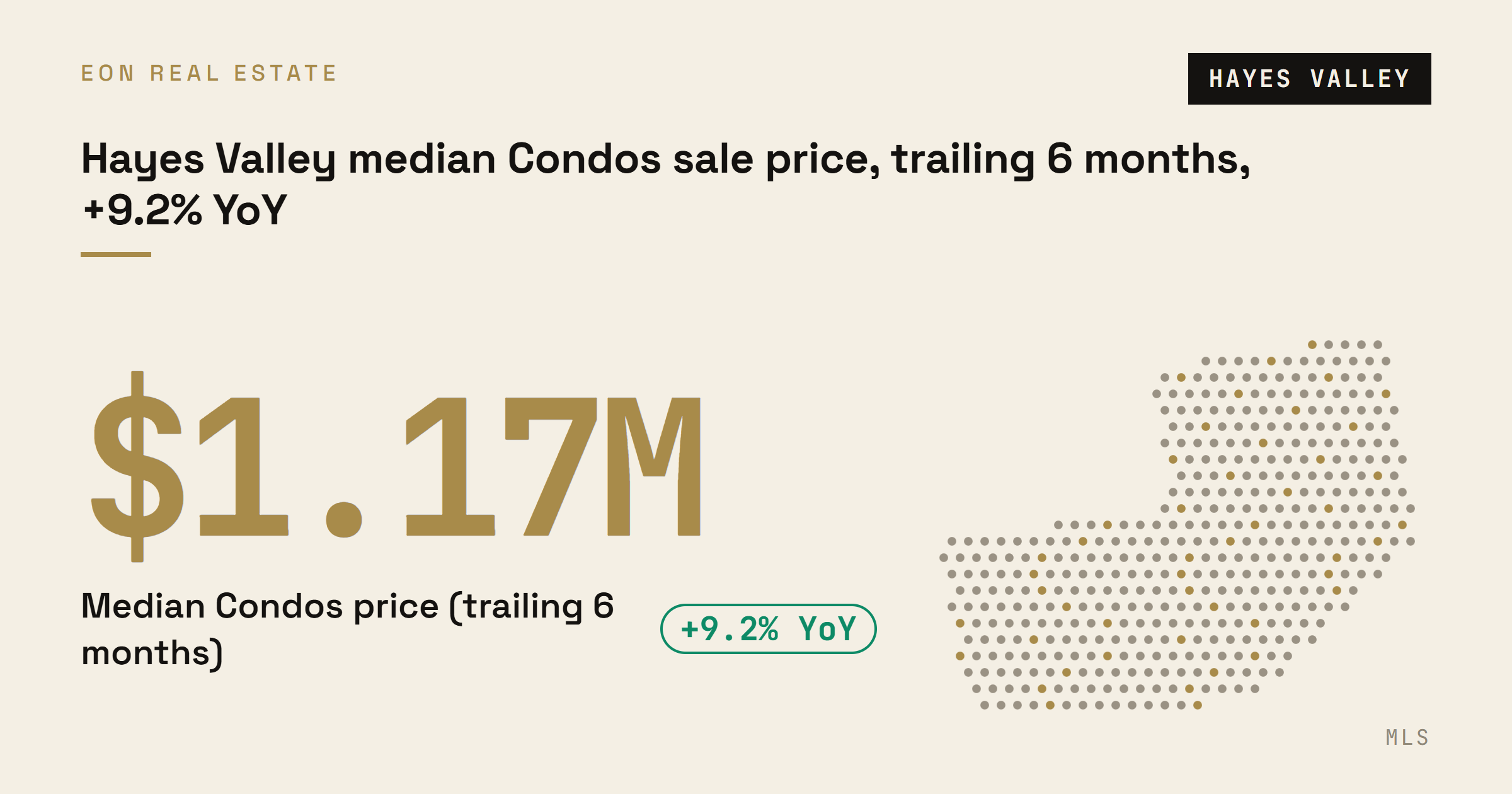
The number that defines Hayes Valley in September 2026 is $1.17M, the median condo close over the trailing six months, up 9.2% from a year ago. That is the segment that actually trades here: 27 condos closed in the window against just three single-family homes. The condos moved in a median 15 days on market, and seven of the eight most recent closed condos sold above their list price, so demand is real and buyers are competing. The backdrop is a 30-year fixed rate of 7.03% the week of September 24, 2026 (Freddie Mac PMMS), which trims the buyer pool but has not slowed the well-priced Hayes Valley condo. After running the comp set on this neighborhood, the pattern I keep seeing is a two-bedroom Victorian-conversion condo, updated, near Patricia's Green, closing quickly and slightly over ask. Here is what the data shows by property type, what is selling, and what to weigh before you buy or sell here.
Hayes Valley by the numbers
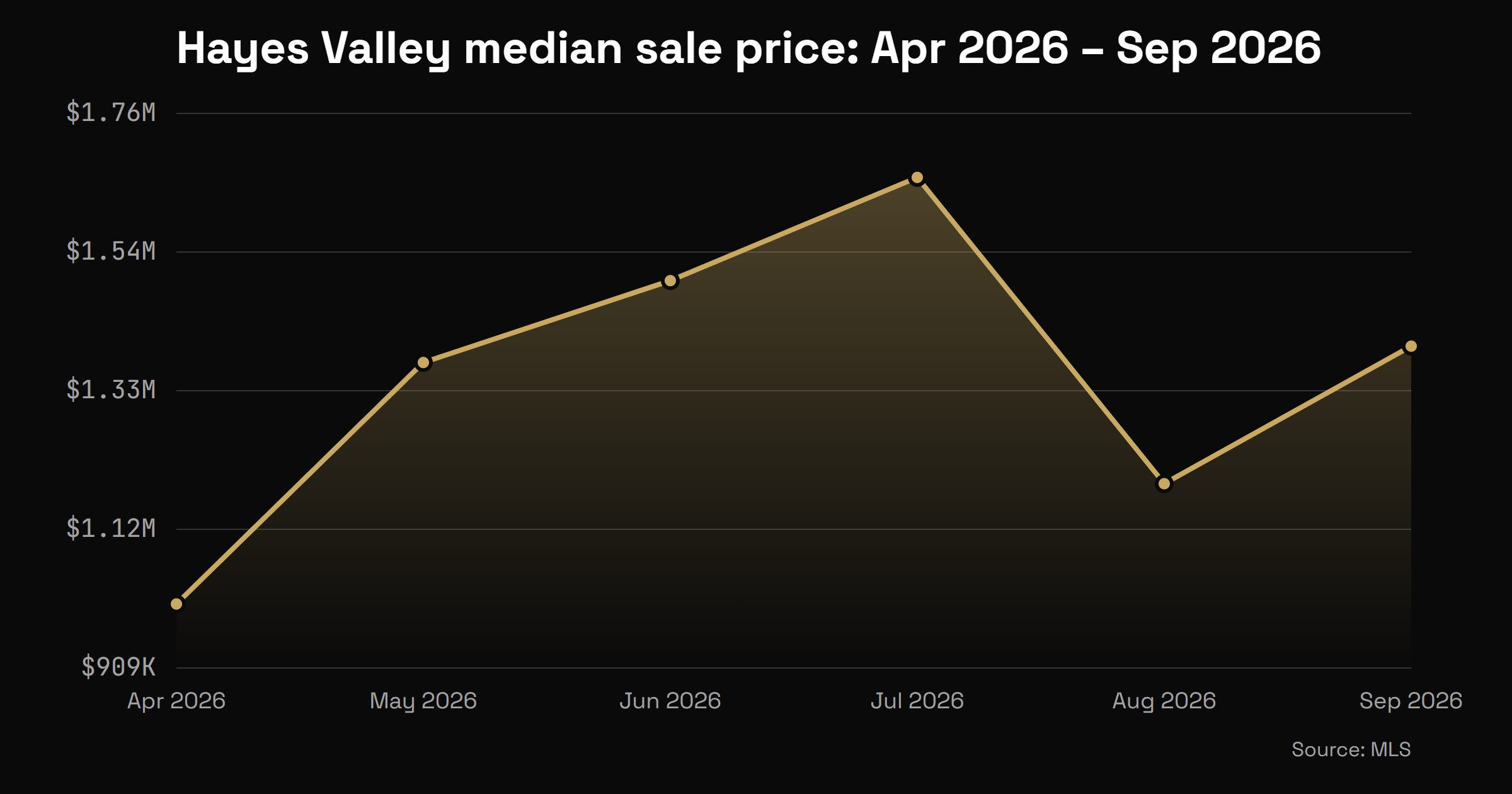
Read those numbers by property type, never blended. Hayes Valley's condos and its rare houses live in different price worlds, and mixing them produces a meaningless middle. The condo median is the reliable figure because it rests on 27 closings; the thinner segments below sit on a handful of sales each and swing hard from one deal to the next. Activity across the neighborhood has broadened, too: counting every property type together, Hayes Valley logged 111 sales over the trailing year, and the average time on market tightened from 49 days a year ago to 29 now. That is a market speeding up, not cooling, and it is a large part of why sellers are seeing quick, competitive offers this fall while buyers have to come in prepared.
What is actually selling
The trading here is overwhelmingly attached housing. Over the trailing six months, 27 condos and five tenancy-in-common units closed, against three single-family homes and a scattering of two-to-four-unit buildings. That mix reflects the neighborhood's Victorian and Edwardian flats carved into condos and TICs, plus a layer of newer construction around Octavia Boulevard. For a fuller picture of how those building types price differently, our San Francisco home styles guide breaks down Victorians, Edwardians, and modern condos.
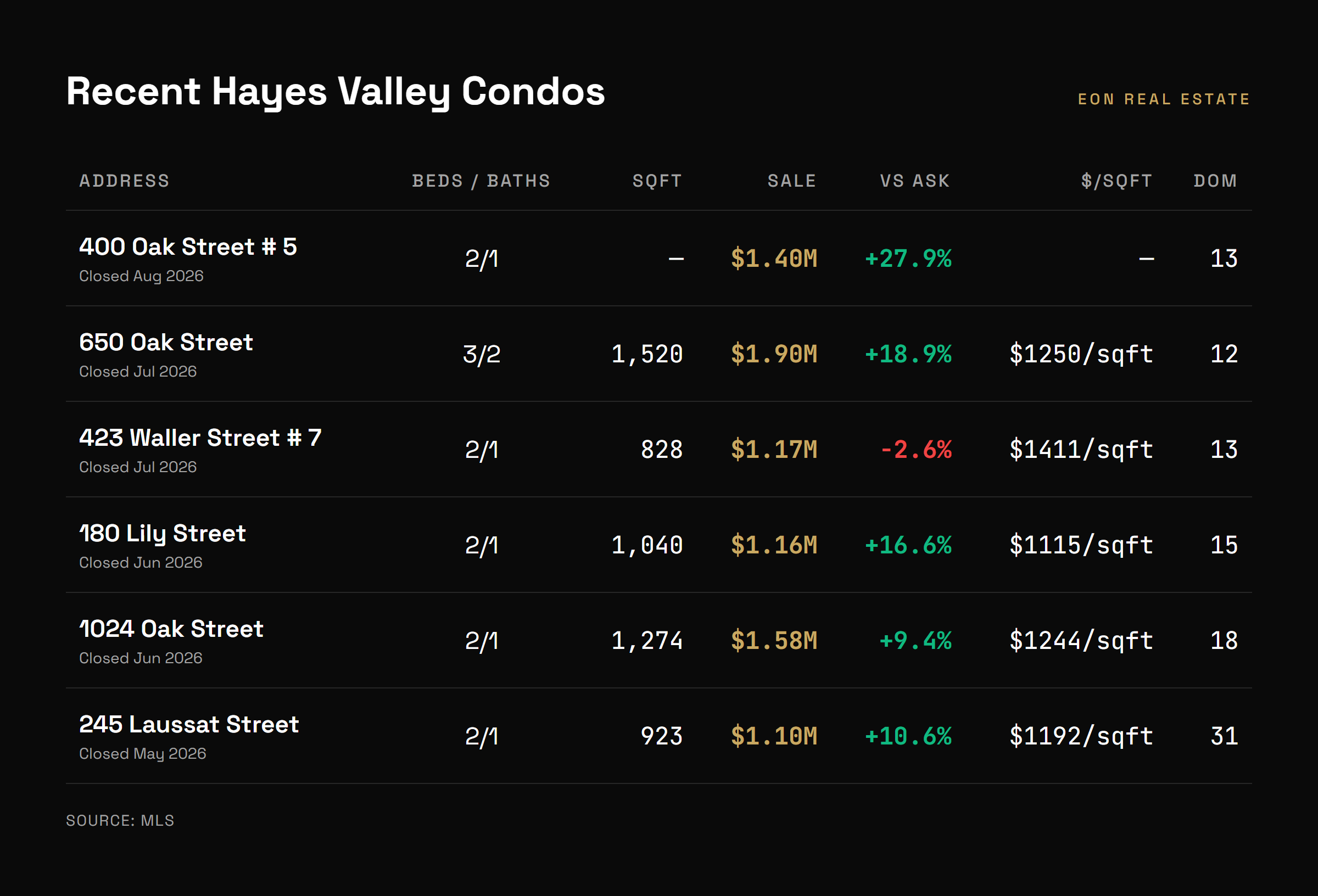
The recent condo closings tell a consistent story: updated two-bedroom units on the blocks around Oak, Waller, Lily, and Page Streets, most closing within about two weeks and above list. Condition drives the premium. Renovated units with parking sold quickly and often well over asking, while the one recent condo that closed below its asking price was priced at the top of its range to begin with. I track these block by block, because a renovated two-bedroom with deeded parking and a top-floor unit with a skylight can carry very different premiums even on the same street. Buyers who understand which features the market is paying up for right now are the ones writing winning offers without overpaying.
TICs, at a $1.50M median across five closings and a median 12 days on market, are moving even faster than condos, which is unusual and worth watching, though five sales is a small base. The pattern fits the broader San Francisco condo recovery: the previously weakest attached-home segment has been firming through 2025 and 2026 as downtown demand returned, according to The San Francisco Standard. Hayes Valley, walkable and central, is exactly the kind of neighborhood that benefits first when attached-home demand comes back.
How Hayes Valley fits the citywide picture
Hayes Valley sits in the mid-tier of the San Francisco market: pricier than the outer districts, well below the Pacific Heights and Noe Valley single-family tiers. Its condo strength mirrors what is happening across the city, where attached homes are recovering while single-family homes hold their own on separate cycles, a divergence The San Francisco Standard has documented. If you are comparing neighborhoods, our Noe Valley market update shows a house-led market a few notches up the price ladder, and our ranking of San Francisco's richest neighborhoods by sale price puts Hayes Valley's numbers in citywide context. The takeaway: Hayes Valley is a place to buy a well-located condo, not a detached house.
The rate environment shapes who is buying. At 7.03% on a 30-year fixed, the monthly payment on a mid-$1M condo keeps the most rate-sensitive buyers on the sidelines, which is one reason the condos still selling here skew toward turnkey, updated units that need no additional spend after close. Buyers who can absorb the current rate, or who plan to refinance if rates ease, are the ones competing hardest, and they are concentrating their offers on the move-in-ready inventory. That dynamic rewards sellers who prepare a unit properly before listing and penalizes anyone hoping a buyer will look past deferred maintenance in exchange for a discount, because in this segment there are enough qualified buyers to skip the project and pay up for the finished home instead.
Neighborhood context
Hayes Valley sits in the Western Addition district of San Francisco, between Alamo Square and the Civic Center, and takes its name from Hayes Street, named for Thomas Hayes, the city's county clerk from 1853 to 1856 (Wikipedia). It is one of the most walkable pockets in the city: a 98 Walk Score (Walker's Paradise), a 96 Transit Score (Rider's Paradise), and an 81 Bike Score (Very Bikeable). Muni lines including the 7 and the 22 run within a couple of blocks of the neighborhood's core, so getting downtown or across town rarely requires a car. The retail spine along Hayes Street and the park core at Patricia's Green anchor a dense mix of restaurants and shops, from Suppenküche and Souvla to Salt & Straw, and that walk-everywhere quality is a real part of what buyers pay for here.
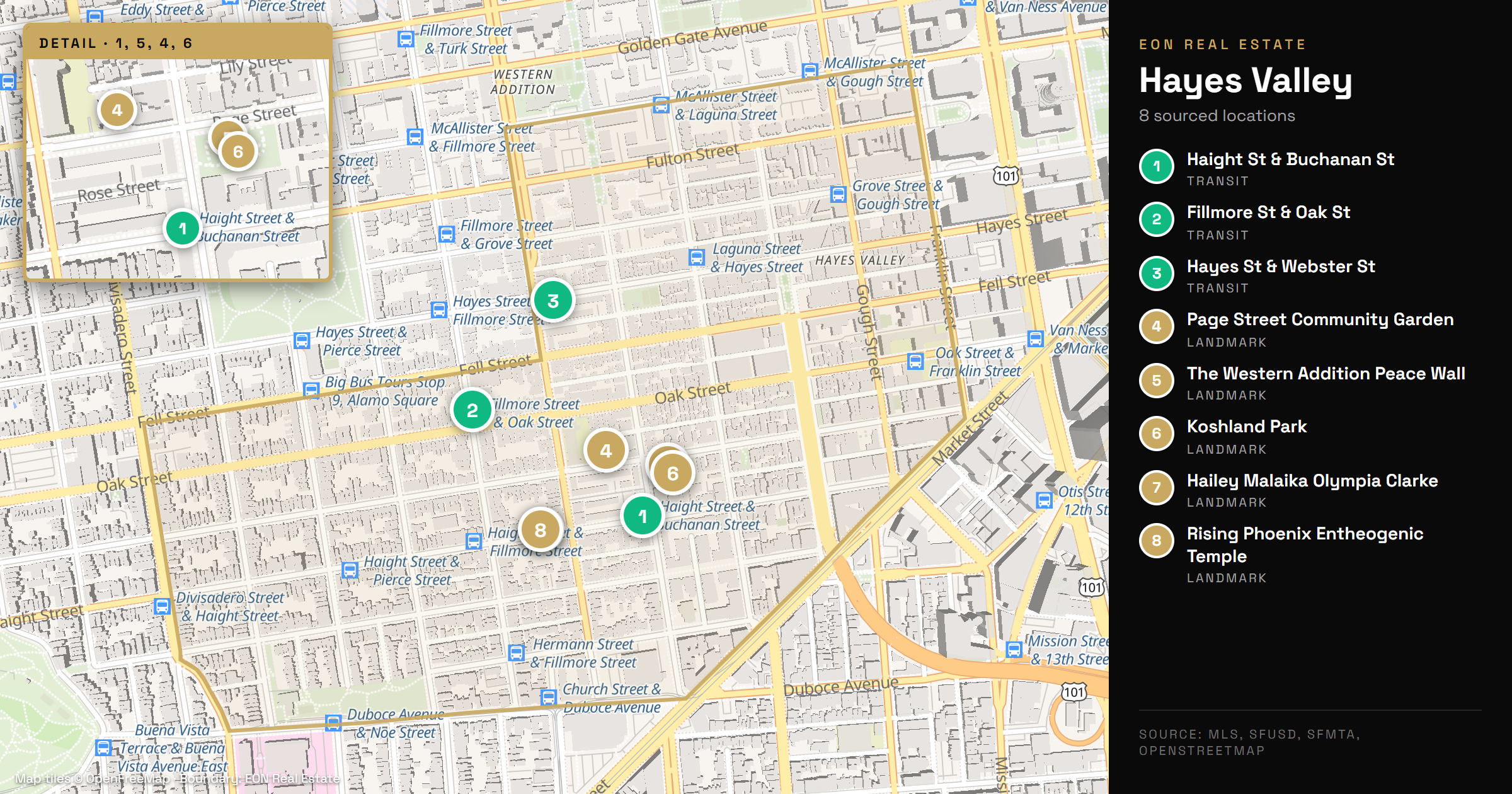
Families weigh school access as part of the calculation. Alvarado Elementary is among the SFUSD schools serving the area, and enrollment runs through the district's assignment system rather than by strict address, so I always tell buyers to verify current attendance mechanics with SFUSD directly before relying on them. The neighborhood's appeal is less about any single amenity and more about the density of them: parks, transit, dining, and jobs all within a short walk, which is the structural reason condo demand here stays firm even with mortgage rates in the sevens.
What to consider before you act
The headline numbers are strong, but Hayes Valley carries tradeoffs that shape any decision here.
You are buying a condo, with HOA math
At a $1.17M median, most of what you can buy in Hayes Valley is a condo or TIC, which means monthly HOA dues and, for TICs, a shared mortgage or fractional-loan structure. That changes your carrying cost and your financing options versus a single-family home. I walk buyers through the HOA and TIC financing math before we tour, because it can move the effective monthly payment more than the list price does, and a lower sticker price on a TIC does not always mean a lower monthly cost.
Thin inventory in the higher tiers
With only three single-family closings over six months, anyone wanting a house in Hayes Valley is shopping a very small pool, and the $3.80M median for those three is not a stable benchmark. If a detached home is the goal, I tell buyers to be ready to move fast on the rare listing or to widen the search to adjacent neighborhoods where houses trade more regularly.
Speed cuts both ways
A median 15 days on market for condos is a seller's tempo. Buyers need financing lined up and a decisive offer strategy, because the well-presented unit will not sit. Sellers, in turn, should not read the fast market as a license to overprice: the one recent condo that closed under asking was the one that reached too high at list. I price to the recent comps, not to hope, because in a quick market an aggressive list price is the surest way to sit and then chase.
How much does a condo cost in Hayes Valley in 2026?
As of September 2026, the median Hayes Valley condo closed at $1.17M over the trailing six months, up 9.2% year over year, at a median $1,129 per square foot. That figure rests on 27 closings, so it is a reliable read on the segment. Individual prices vary with size and condition, plus whether the unit has parking, but the mid-$1M range is the center of gravity for a two-bedroom here.
Is Hayes Valley a seller's market in 2026?
Yes, for condos: as of September 2026, condos closed in a median 15 days on market and seven of the eight most recent closings sold above their list price, both hallmarks of a seller's market. TICs moved even faster at a median 12 days. Pricing discipline still matters: the lone recent condo that sold below asking had been listed at the top of its range, a reminder that a fast market still punishes an aggressive list price.
Are Hayes Valley home prices going up in 2026?
Yes: as of September 2026, Hayes Valley condos are up 9.2% year over year to a $1.17M median, and TICs are up 18.1% to $1.50M. The smaller segments show larger year-over-year swings, but those rest on only a few sales each and should be read with caution. The dependable signal is the condo market, and it is rising, in step with the broader citywide condo recovery documented by The San Francisco Standard.
How walkable is Hayes Valley?
As of 2026, Hayes Valley is one of the most walkable neighborhoods in San Francisco, with a 98 Walk Score and a 96 Transit Score, plus an 81 Bike Score. Daily errands rarely require a car: the Hayes Street retail corridor, Patricia's Green, and Muni lines including the 7 and 22 put most needs within a short walk. That walk-everywhere quality is a measurable part of the price premium condos command here versus more car-dependent parts of the city.
What kinds of homes sell in Hayes Valley?
Overwhelmingly condos, then TICs: as of September 2026, 27 condos and five TICs closed over the trailing six months, against just three single-family homes and a few two-to-four-unit buildings. The stock is largely Victorian and Edwardian flats converted to condos or TICs, plus newer construction near Octavia Boulevard. If you want a detached single-family house, expect very limited choice in this neighborhood and be prepared to compete when one lists.
Talk to me about your Hayes Valley move
The median tells you the center of the market, not what your specific unit is worth. If you would like the comp set for your building or block, broken down by property type and condition, I can pull the exact sales we used here and walk you through what they mean for a purchase or a sale. No pressure, just the numbers for your situation.