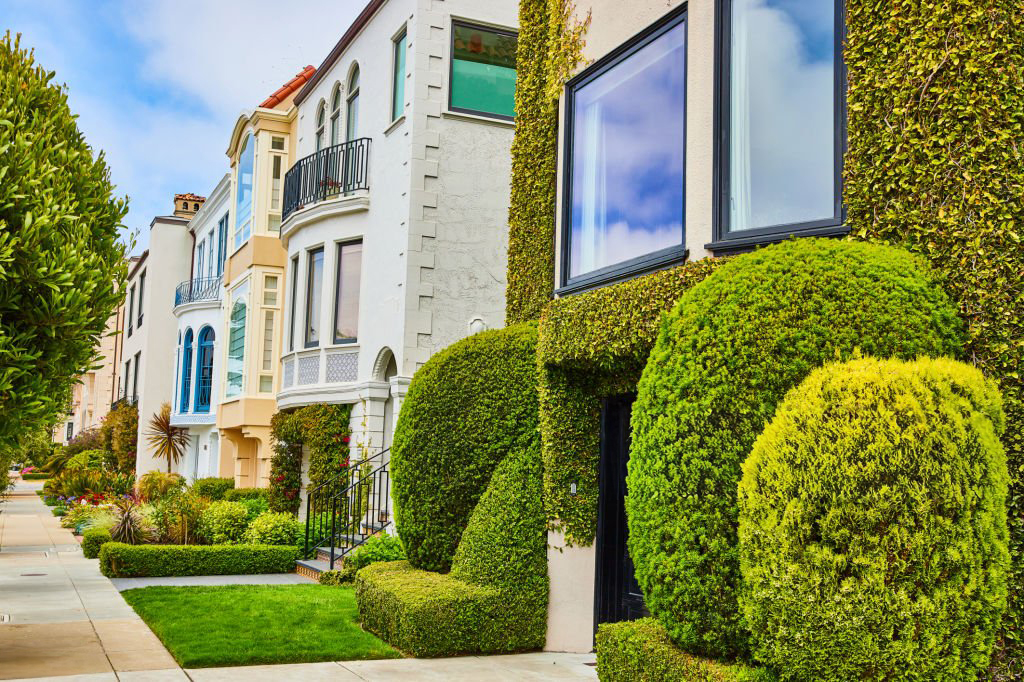
Marina District prices in 2026 vary sharply by property type: single-family homes close near a $5.25M median over the trailing six months, while condos land near $2.09M. Homes move fast, a 12-day median in the last 30 days. Unless otherwise noted, all market figures here come from MLS data.

The Marina sits on the ground staged for the 1915 Panama-Pacific International Exposition, the fair San Francisco built to prove it had recovered from the 1906 earthquake. When the fair closed, every exposition structure was pulled down except the Palace of Fine Arts, and the flat blocks that replaced them became the neighborhood you see today (Wikipedia). That history matters to a buyer, because it explains why so much of the housing here reads as low-rise, pre-war, and tightly platted rather than towered.
I'm Chris Chour, founder and broker of EON Real Estate. After running comp sets on Marina closings across 2026, I keep coming back to one split that the neighborhood pitch tends to skip: this is a condo-and-TIC market by transaction volume, but a trophy single-family market at the top, and the two halves behave nothing alike. A one-bedroom condo near the water and a four-bedroom house two blocks inland are not the same trade, and pricing either one off a blended neighborhood median is how buyers overpay.
The Marina District by the numbers

Read those monthly swings with care. The line runs from a $4.26M median in March 2026 to $1.53M in August 2026, but each month carries only four to fourteen closings, so the median lurches every time the mix tilts toward houses or toward one-bedroom condos. The steadier read is the trailing six-month median of about $2.97M across 41 closings, or the 30-day figure when you want this month's pace. Over the full trailing year, 98 homes closed at a $2.5M median, roughly 43% above the citywide median of $1.75M.
The price tiers, from one-bedrooms to trophy houses
Split the last year of closings into segments and the neighborhood's shape shows up cleanly. The largest segment is $1M to $2M, at about 33% of sales and dominated by condos and tenancies-in-common. Below $1M sits a thin 10%, almost entirely one-bedroom condos, with the lowest closing of the year at a $707K studio. The buyers I work with usually start here when they want a Marina address without a house budget.
The $2M to $3M segment, about 15% of sales, is the crossover zone where larger two-bedroom condos and smaller two-unit buildings trade. The $3M to $5M segment is heavier than most buyers expect at roughly 32% of sales, and it is where detached houses and renovated flats meet. Above $5M sits the trophy tier, another 10%, almost all single-family homes. Recent examples make the top end concrete: 349 Marina Boulevard, a water-view house sold as-is, closed at $5.7M in March 2026, and 172 Cervantes Boulevard, renovated, closed at $5.25M the same month.

Condos tell their own story. Over the trailing six months the condo median was $2.09M at about $1,586 per square foot, up 16.9% from a year ago, with a 10-day median time on market. The spread is wide: 400 Avila Street #303, a renovated one-bedroom with a Golden Gate Bridge view, closed at $1.1M with no days on market in April 2026, while 2370 North Point Street, a three-bedroom with combined city and water views, closed at $4.11M in May 2026. View, floor level, and renovation status move a Marina condo price more than square footage alone.
Where homes actually trade
A handful of blocks do a disproportionate share of the turnover. The 1200 block of Francisco Street led the trailing year with seven closings at a $1.23M median and about $1,403 per square foot, a cluster of one- and two-bedroom condos that trade often because there are simply more units per block there. The 400 block of Avila Street added four sales near $1.46M, and the 1400 block of Francisco Street and the surrounding Retiro Way condos logged three closings each near $1.23M to $1.25M.

The higher-priced blocks turn over less but set the ceiling. The 3300 block of Pierce Street posted a $4.9M median at about $1,732 per square foot, the strongest per-foot pricing among the active blocks, and the 3700 block of Webster Street sat near $3.65M. Walkability is uniformly high: the neighborhood carries a 98 Walk Score, and the block around 3300 Pierce scores 99 on Walk Score, with the 1200 Francisco corridor pairing a 94 Walk Score to an 81 Transit Score. For transit itself, the 22-Fillmore line runs closest, with a stop at Fillmore and Cervantes about 107 meters from the neighborhood center, and the 28, 30-Stockton, 30X-Marina Express, and 43 routes all reach the district.
How the homes break down
By property type over the last year, condos are about 44% of sales at a $1.36M median, single-family homes about 21% at a $4.9M median, and tenancies-in-common about 17% at roughly $1.53M. Two-unit buildings add about 10% near $3.38M, with a smaller set of three- and four-unit buildings above that. If you want a detached family home, you are competing in the thinnest and most expensive fifth of the market.
The building age is the other defining trait. The census block group at the neighborhood's core reports a median year built of 1938 (Census ACS), which fits the pre-war platting after the exposition came down. Most of what trades is Marina-style flats and houses from the 1920s and 1930s, frequently updated inside but original in bones. That same census area shows about 14% owner-occupancy and a median gross rent near $2,794 (Census ACS), a reminder that a large share of Marina buildings are held as flats and rentals rather than owner-occupied houses.
What to consider before buying in the Marina
Every neighborhood guide sells the waterfront and stops there. The honest version names the tradeoffs, because they are what actually shape your offer and your monthly cost here.
Older construction and seismic review
With a median build year of 1938 in the core (Census ACS), most Marina homes predate modern seismic code, and many are the flat-over-garage form that can carry soft-story risk. I won't sugarcoat this part: the ground floor garage openings that make these buildings so usable are exactly the geometry that needs bracing. I'd get the soft-story and foundation review done early, before you are emotionally committed, so the retrofit question is priced into your offer rather than discovered after.
Parking, and the reality of a 1920s garage
Walkability is a genuine strength at a 98 Walk Score, but car storage is not. Many flats share a single tandem garage or offer one space for a full-floor unit, and the pre-war garages that do exist were built for a 1930s car. Confirm the parking on the actual listing rather than assuming, because a deeded space versus a shared one can swing both value and daily livability.
Condo, TIC, and financing mechanics
Because so much of the sub-$2M market is condos and tenancies-in-common, financing rules matter as much as price. A TIC typically needs a fractional loan and carries shared-ownership agreements that a first-time buyer should read closely. TIC pricing also swings hard on small volume: the trailing-six-month TIC median of $1.62M was down sharply from the prior year, a reminder that a handful of high-end or low-end closings can move the number.
School attendance runs on a lottery, not a ZIP
Marina addresses feed SFUSD, which assigns elementary seats through a city-wide lottery rather than by street, so proximity to a school is not a guarantee of enrollment (SFUSD). Lilienthal Elementary, a K-8 with about 673 students, and Marina Middle both sit in the area, with Galileo High nearby, but families should confirm current lottery mechanics rather than assume attendance.
The buyer's playbook for the Marina in 2026
Start with the per-type comp set, not the blended median, because the two halves of this market move on different levers. For a condo, anchor to the last 30 to 90 days and adjust hard for view tier and floor level: a water or bridge view can add a seven-figure premium, as the $1.1M one-bedroom on Avila versus the $4.11M three-bedroom on North Point shows. For a house, the trophy tier turns on condition and lot, and as-is estate homes like the Marina Boulevard closing trade at a discount to renovated comps.
Here's the discipline I'd bring to an offer in the Marina right now. Weigh whether the unit is vacant or tenant-occupied, since an occupied home carries San Francisco's owner move-in rules and timing, and it shows up in price: a tenant-occupied triplex at 3130 Octavia Street closed at $2.375M in May 2026, below its $2.7M asking. Read the parking, the retrofit status, and the HOA or TIC dues before you anchor a number. If you are selling into this market, plan condition and presentation early, because renovated, move-in homes are the ones clearing in a week here, and it is worth knowing what staging costs before you list. The blocks south of Lombard shade into Cow Hollow, so weigh both when you map your search.
How much do homes cost in the Marina District?
As of Q3 2026, single-family homes close near a $5.25M median over the trailing six months, while condos land near $2.09M and tenancies-in-common near $1.62M. The blended 30-day median across every property type sits near $3.6M, but that figure spans a $707K studio at the low end and an $8.6M sale at the top, so read the per-type numbers instead. Marina pricing runs about 43% above the citywide median of $1.75M, which places it firmly among the city's premium neighborhoods.
Are Marina District home prices going up or down?
Up: as of Q3 2026, the Marina's trailing-12-month median rose about 8.3% from a year earlier, from roughly $2.31M to $2.5M, and average price per square foot climbed about 14.5% to $1,373. Time on market held near 33 days across the full year, though the last 30 days ran far faster at a 12-day median. The direction is firmer pricing and quick sales for well-prepared homes, not a cooling market.
Is the Marina District a good place to buy in 2026?
In 2026, the Marina fits buyers who want walkability and a waterfront address and can weigh older construction against modern seismic expectations. It posts a 98 Walk Score, homes sell in a 12-day median over the last 30 days, and condos start near $1.1M for a one-bedroom. The main factors to weigh are parking, HOA or TIC financing, and the pre-1940 building age. Those tradeoffs, more than the view, decide whether it fits your plan.
What types of homes are for sale in the Marina District?
As of Q3 2026, condos are about 44% of Marina sales at a $1.36M median, single-family homes about 21% at a $4.9M median, and tenancies-in-common about 17% at roughly $1.53M. Two-unit buildings add another 10% near $3.38M, with a smaller set of three- and four-unit buildings above that. So by volume the Marina is a condo-and-TIC market, with detached houses concentrated at the top of the price range.
How fast do homes sell in the Marina District?
Very fast: over the last 30 days of 2026, Marina homes closed in a 12-day median time on market, with the trailing six-month median at 11 days. Condos and single-family homes both moved in roughly one to two weeks, and several closed within a week of listing. Across the full trailing year the average is longer, near 33 days, because thinner winter months pull it up. Well-priced, move-in homes still sell quickest.
Which Marina District streets and blocks sell the most?
As of Q3 2026, the 1200 block of Francisco Street leads Marina turnover with seven closings over the trailing year at a $1.23M median, reflecting its cluster of one- and two-bedroom condos. Higher up, the 3300 block of Pierce Street posts a $4.9M median at about $1,732 per square foot, and the 3700 block of Webster Street sits near $3.65M. The 400 block of Avila Street adds four condo sales near $1.46M.
Talk to me about the Marina District
If you are weighing a Marina condo against a house, or trying to read whether a block trades on view, parking, or retrofit status, that is the exact work I do before an offer. When you are ready, I can pull the block-level comp set for the specific street and property type you are considering and walk you through what the number should be. You can see the current map of San Francisco neighborhoods in our map of San Francisco neighborhoods guide to orient your search.